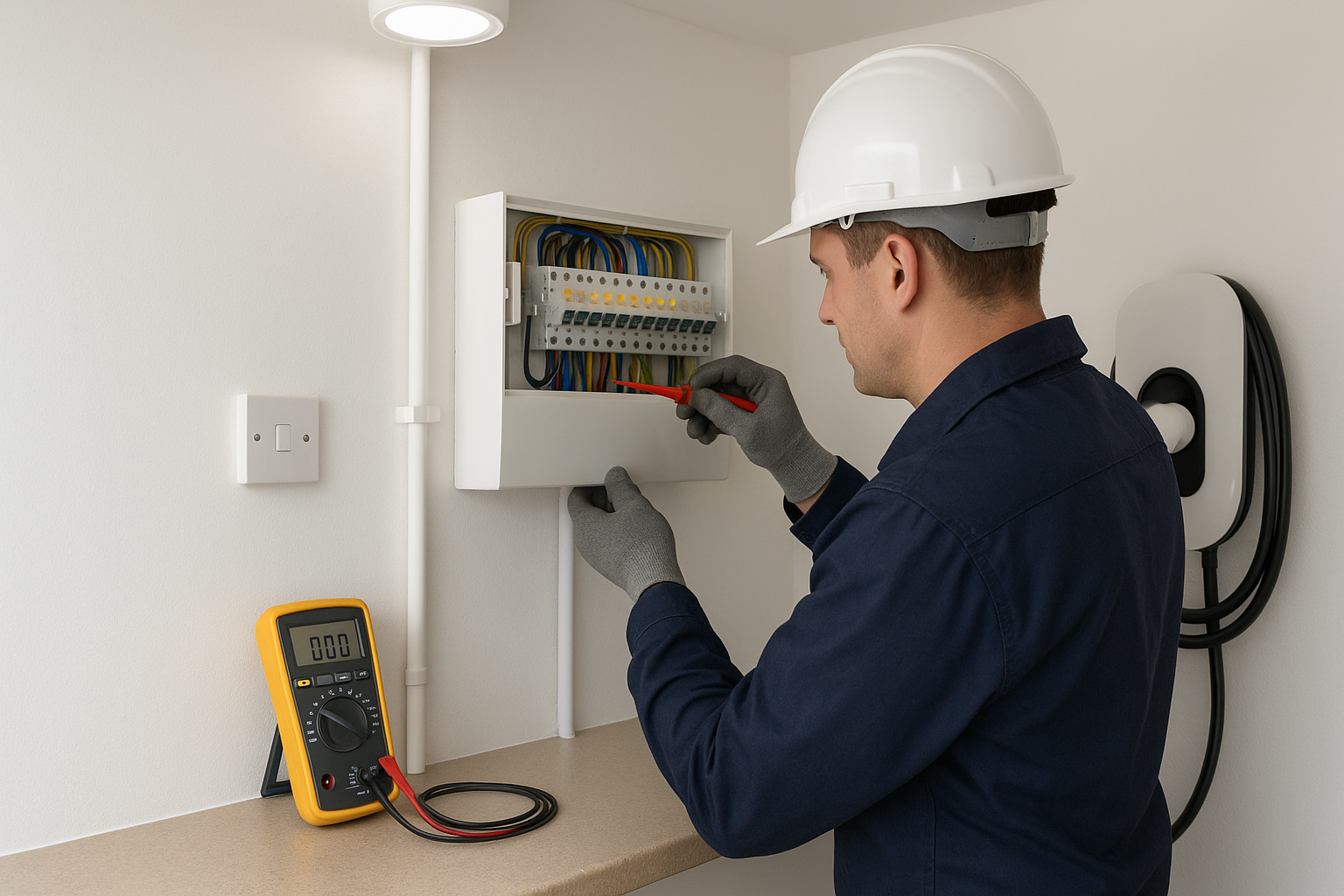
If you need rewiring in Poplar, Black Elext Electrics provides a practical service for homes, flats, rental properties, shops and offices that are dealing with old wiring, repeated faults, failed inspections or renovation work. Rewiring is often the right option when the existing electrical circuit and equipment are no longer reliable, when the installation has signs of age, or when the property needs a safer layout for modern use.
We work across Poplar and nearby locations including Canary Wharf, Limehouse, Bow, Canning Town and Mile End, with local jobs around Poplar DLR Station, Chrisp Street Market, All Saints DLR and Limehouse Basin. That local focus matters because electrical work in this area often involves a mix of Victorian terraces, converted flats, older rewires, modern apartments, shops and office space, each with different access, disruption and testing needs.
For landlords, managing agents, builders and business owners, the main concern is usually not just fixing a fault, but keeping disruption under control while the installation is made safe and ready for normal use. If you are dealing with old rubber or fabric cabling, no earthing, frequent tripping, renovation work, or a property that has failed an inspection, it is worth arranging a proper assessment rather than waiting for the problem to grow.
Call 020 3670 4249 or request a visit today.
We also handle related electrical services such as electrician callouts, emergency electrician support, electrical repairs, consumer unit work, lighting installation, socket installation, electrical fault finding and domestic electrician work. For commercial customers, we can discuss phased work where possible so the premises can stay operational while the rewiring is carried out in stages.
Full House Rewiring in Poplar
Full house rewiring is usually the right choice when the existing wiring is outdated, unsafe or too unreliable to keep repairing. In Poplar, this often comes up in older houses, flats that have been altered over time, and properties where the electrical system has reached the stage where faults are appearing in several rooms rather than one isolated area.
A full house rewire normally involves replacing the old cabling, updating sockets and switches where needed, checking the condition of the circuit and equipment, and planning the installation so it suits how the property is actually used. That can include modern kitchen loads, home office equipment, heating controls, lighting circuits and added sockets for business or rental use.
Common signs that a full rewire may be needed include:
- Old rubber or fabric cabling
- No earthing or poor earthing arrangements
- Repeated tripping or frequent faults
- Burning smells, discoloured accessories or damaged wiring
- Old consumer unit equipment that no longer suits the property
- A failed electrical inspection or concerns raised during a tenancy change, sale or renovation
We start by looking at the existing installation and identifying what can be retained, what should be replaced and what needs testing before any work moves forward. Where the work is likely to be notifiable under Building Regulations, customers should make sure the correct certification and compliance route is agreed before the job begins.
For landlords and managing agents, a full rewire can be the cleanest way to bring a property back to a usable standard after years of patch repairs. For shops and offices, it can also reduce disruption caused by repeated callouts, especially where the current setup has been adapted over time and no longer reflects the load on the circuits.
Partial and Room Rewiring in Poplar
Partial and room rewiring is often the most sensible option when only part of the installation is causing trouble. This can be useful in a single kitchen, a damaged bedroom circuit, an office area, a shop floor, or a flat where one section has been altered and the rest of the wiring is still serviceable.
In Poplar properties, partial rewiring is commonly requested after nuisance tripping, damaged accessories, or when a room is being updated and the existing wiring does not meet the demands of the new layout. It can also be a good option where access is limited and the customer wants to reduce disturbance by focusing on the affected area first.
Examples of partial rewiring work include:
- Replacing wiring in one or more rooms
- Upgrading circuits that feed high-use appliances
- Adding sockets or moving points as part of a layout change
- Replacing unsafe or deteriorated cable runs
- Supporting a refurbishment without stripping out the whole property
Before any partial rewire, it is important to test the affected circuits and understand how they connect to the rest of the installation. That helps avoid hidden issues later, especially in older flats and converted buildings where wiring has often been altered by more than one person over the years.
For landlords, partial rewiring can be a practical response when one tenant-reported issue needs attention without committing to a full property strip-out immediately. For business premises, it can help keep a trading area usable while the faulty section is made safe and restored.
Period Property Rewiring in Poplar
Period property rewiring needs a careful approach because older buildings often combine original construction with later electrical alterations. In Poplar, that can mean Victorian terraces, older converted flats and buildings where the wiring has been extended in stages over many years.
These properties can present specific issues such as hidden cable routes, limited void space, older accessories, mixed wiring ages and outdated circuit arrangements. In some cases, the property may still have signs of earlier materials or methods that are no longer suitable for modern electrical use. That is why period property rewiring should begin with inspection, testing and a clear plan for access and reinstatement.
Typical priorities in period property rewiring include:
- Improving safety without damaging more of the building than necessary
- Planning routes that respect the structure and decoration
- Updating sockets, lighting and control positions for modern use
- Checking earthing and circuit protection carefully
- Reducing future fault risk by replacing ageing cable runs
Many period properties in and around Poplar have been adapted for mixed residential use, rental occupation or home working. That means the rewiring plan should reflect both the age of the building and how the rooms are used today. We aim to keep customers informed about what is found, what needs attention first and what can be scheduled in phases if that is the better disruption-reduction option.
If you are managing a period flat or house and the wiring has not been properly reviewed for years, it is wise to switch off any circuit that is showing signs of damage and arrange a qualified electrician to inspect it rather than using guesswork.
Rewiring During Renovation in Poplar
Rewiring during renovation in Poplar is often the best time to deal with electrical problems because access is already open and the layout may be changing anyway. This is common in kitchen upgrades, extensions, office fit-outs, shop refits and flat refurbishments where the electrical system needs to match the new design.
When rewiring is carried out alongside renovation work, the key is coordination. Builders, decorators, landlords and property managers all need to know what is being changed, when access is needed and which areas must stay protected. Good planning helps reduce delays, avoids repeated visits and keeps the installation safer during the build process.
We can support renovation projects with:
- Planning the electrical layout before first fix
- Running new cables during the build stage
- Coordinating with other trades where access is shared
- Completing second fix once walls, ceilings and finishes are ready
- Testing the installation before handover
Renovation jobs often reveal hidden issues such as old rubber or fabric cabling, damaged junctions, poorly extended circuits or previous alterations that were never properly tested. Finding those problems early is important because a renovation can make them harder to access later.
For commercial premises, rewiring during renovation can also reduce business interruption. If a shop or office is being refitted, electrical work can often be scheduled around the build sequence so the space is not left unusable for longer than necessary. If the premises has already had a power loss or repeated faults, it is sensible to identify the problem circuit before the next stage of the fit-out goes ahead.
First Fix and Second Fix Wiring in Poplar
First fix and second fix wiring in Poplar is a core part of rewiring projects, especially during renovations, refurbishments and property upgrades. First fix is the stage where the cables and hidden parts of the installation are put in place. Second fix is when the visible accessories and final equipment are fitted after the building work has progressed.
For homeowners, landlords and builders, understanding the difference helps with planning. First fix usually needs access before plastering, decorating and joinery are completed. Second fix comes later, once the surfaces are ready and the room can be finished properly.
First fix and second fix work may include:
- Routing new cables for lighting and sockets
- Preparing circuits for kitchens, utility areas or office equipment
- Positioning switch lines and accessory points
- Fitting sockets, switches, lights and final electrical equipment
- Testing each stage before the next trade moves in
This staged approach is particularly useful in Poplar properties where access can be tight, occupiers may still be in place, or the work is being carried out in a shared building. It also helps reduce disruption because noisy, dusty and access-heavy work can be completed earlier, leaving the final finishing stage cleaner and quicker.
Where a property has a history of faults, first fix and second fix wiring should be carried out with the wider condition of the installation in mind, not just the immediate room. That means checking the circuit and equipment as a whole so the finished result is safer and more dependable.
How we approach electrical testing and repair decisions
Before recommending a rewire, we look at the symptoms, the condition of the installation and the practical use of the property. In some cases, a fault can be traced to a localised issue rather than a full replacement. In others, the wiring age and condition make repair work a short-term fix only.
Typical steps can include checking the affected circuit, identifying the source of the fault, reviewing visible cable condition, assessing sockets, switches, lighting points and consumer unit equipment, and explaining the next repair or upgrade steps clearly. Where a property has already shown signs of nuisance tripping or loss of power, we aim to leave the installation secure and make the next stage of work straightforward to plan.
Recent local work has included an emergency power loss callout in Canary Wharf, where the problem circuit was identified and the next repair steps were explained before leaving the installation secure; a kitchen wiring inspection in Limehouse after nuisance tripping, where the repairs needed before further appliance use were highlighted; and support with a replacement light fitting in Bow, including a check of the switch line so the room could be used normally again.
Those jobs reflect the kind of issues that often lead customers to ask about rewiring: isolated faults, repeated tripping, unsafe age-related wiring and electrical layouts that no longer suit the property.
Working with landlords, managing agents and commercial premises
For landlords and managing agents, rewiring is often about safety, compliance planning and reducing repeat callouts. A property that has old wiring or ongoing faults can create avoidable disruption for tenants and extra work for management teams. A clear rewiring plan helps deal with the underlying cause instead of repeatedly repairing the same symptoms.
For shops and offices, the priority is usually keeping the business moving. That may mean working in stages, scheduling access outside trading hours where possible, and agreeing which areas must remain available during the project. Electrical work in commercial premises often involves more than just the cable runs themselves, because lighting, sockets, equipment loads and consumer unit arrangements all need to suit the way the space is used.
If you manage a building near Canary Wharf, Limehouse, Bow, Canning Town or Mile End, and you are dealing with frequent faults, old wiring or a failed inspection, it is sensible to get the installation assessed early. That gives you time to plan access, budgets and tenant communication before the problem becomes urgent.
Why choose Black Elext Electrics for rewiring in Poplar
Black Elext Electrics is based at 1 Adderley St, London E14 6LZ and works across Poplar and the surrounding area. Our approach is straightforward: look at the actual electrical condition, explain the options clearly and carry out the work with as little unnecessary disruption as possible.
We focus on local jobs, clear customer advice and practical support for domestic and commercial customers. We also use supplied proof where available, including our Google Business Profile: view our Google Business Profile.
If your property has old rubber or fabric cabling, no earthing, frequent faults, or you are planning a renovation and want the wiring done properly from the start, we can help you decide whether a full rewire, partial rewire or staged repair approach is the right route.
Call 020 3670 4249 or email info@poplarelectricians.co.uk to request a visit today.
Some electrical work may be notifiable under Part P of the Building Regulations. If you are booking rewiring, ask for the correct certification route and make sure the work is planned before walls are closed up or finishes are completed.